
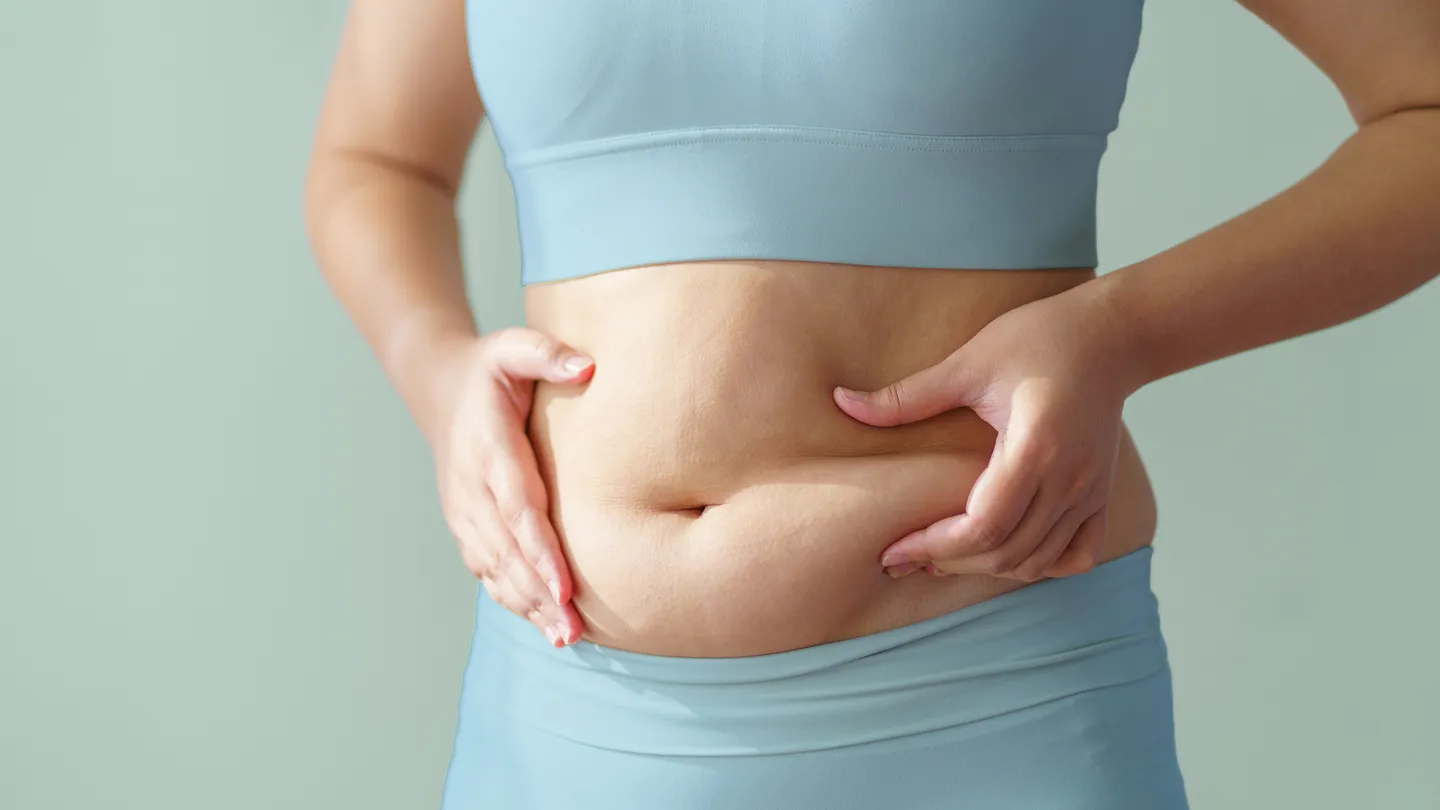

You’ve heard that stress makes you fat—specifically around the belly. But is this actually true, or just another fitness myth? The connection between cortisol and abdominal fat storage is real and well-documented in research. Understanding this relationship explains why managing stress is crucial for targeting belly fat effectively.
What Is Cortisol?
Cortisol is a glucocorticoid hormone produced by the adrenal glands in response to stress. Often called the “stress hormone,” cortisol serves several important functions:
- Mobilizes energy during stress (fight or flight response)
- Regulates blood sugar levels
- Controls inflammation
- Influences memory formation
- Maintains blood pressure
- Affects the sleep-wake cycle
Cortisol follows a natural circadian rhythm—highest in the morning (helping you wake up), declining throughout the day, and lowest at night (allowing sleep). Problems arise when this rhythm is disrupted or cortisol remains chronically elevated.
Acute vs. Chronic Cortisol
Acute Cortisol Elevation (Normal and Beneficial)
Short-term cortisol spikes are normal and even helpful:
- Exercise raises cortisol—this is part of the adaptive stress response
- Waking up causes cortisol surge—helps mobilize energy for the day
- Acute stress triggers cortisol—prepares body for action
During exercise, cortisol actually supports fat mobilization by working with catecholamines to release fatty acids from storage. This is a feature, not a bug.
Chronic Cortisol Elevation (Problematic)
Problems develop when cortisol remains elevated for extended periods:
- Chronic psychological stress
- Sleep deprivation
- Overtraining without adequate recovery
- Excessive caffeine intake
- Chronic illness
This chronic elevation creates the metabolic dysfunction associated with cortisol and fat gain.
How Cortisol Promotes Belly Fat
Visceral Fat Accumulation
Research consistently shows that chronic cortisol elevation promotes fat storage specifically in the abdominal region—particularly visceral fat (the deep fat surrounding organs).
This happens through several mechanisms:
Receptor Density: Abdominal fat tissue has more cortisol receptors than subcutaneous fat elsewhere. This makes belly fat more responsive to cortisol’s effects.
11β-HSD1 Activity: An enzyme called 11β-hydroxysteroid dehydrogenase type 1 converts inactive cortisone to active cortisol within fat tissue. This enzyme is more active in visceral fat, amplifying cortisol’s local effects.
Lipid Metabolism: Cortisol enhances the activity of lipoprotein lipase in abdominal adipose tissue, increasing fat uptake and storage specifically in this region.
Insulin Resistance
Chronic cortisol elevation promotes insulin resistance, which compounds the fat-storage problem:
- Muscles become less responsive to insulin
- Pancreas produces more insulin to compensate
- Elevated insulin promotes fat storage and inhibits fat release
- Insulin resistance is associated with central obesity
The cortisol-insulin interaction creates a cycle that drives abdominal fat accumulation.
Increased Appetite and Cravings
Cortisol stimulates appetite, particularly for high-calorie, palatable foods:
- Activates reward pathways in the brain
- Increases ghrelin (hunger hormone)
- Creates cravings for sugar and fat combinations
- Promotes emotional eating as stress coping
The combination of hormonal fat storage promotion plus increased caloric intake accelerates belly fat accumulation.
Muscle Breakdown
Chronic cortisol is catabolic—it breaks down muscle tissue for energy (gluconeogenesis). Less muscle means:
- Lower metabolic rate
- Reduced glucose disposal capacity
- Worsened body composition even at same weight
The Research Evidence
Multiple studies support the cortisol-belly fat connection:
Stress Studies: People reporting high life stress consistently show greater waist circumference and visceral fat on imaging, independent of overall BMI.
Cortisol Measurements: Higher 24-hour urinary cortisol correlates with greater abdominal fat, particularly visceral fat measured by CT scan.
Cushing’s Syndrome: This condition of extreme cortisol excess produces dramatic central obesity with thin extremities—a clear demonstration of cortisol’s regional fat distribution effects.
Sleep Deprivation Studies: Just a few nights of restricted sleep elevates cortisol and alters fat storage patterns toward the abdominal region.
Common Cortisol Disruptors
Sleep Deprivation
Perhaps the most impactful factor. Even modest sleep restriction:
- Elevates evening cortisol (when it should be low)
- Disrupts cortisol circadian rhythm
- Increases insulin resistance
- Amplifies hunger and cravings
Research shows that people sleeping less than 6 hours nightly have significantly higher visceral fat than those sleeping 7-8 hours, even controlling for other factors.
Chronic Psychological Stress
Work stress, financial pressure, relationship problems, and anxiety maintain elevated cortisol:
- Persistent activation of HPA (hypothalamic-pituitary-adrenal) axis
- No recovery periods for cortisol to normalize
- Combined with stress eating behaviors
Overtraining
Exercise stress is good—until it isn’t. Without adequate recovery:
- Cortisol remains chronically elevated
- Training adaptations cease
- Muscle breakdown exceeds building
- Fat loss stalls despite high activity
The paradox: excessive exercise can actually promote fat storage when recovery is insufficient.
Excessive Caffeine
Caffeine stimulates cortisol release. Moderate consumption is fine, but excessive intake—especially later in the day—maintains cortisol elevation and disrupts sleep, compounding the problem.
Strategies to Lower Chronic Cortisol
1. Prioritize Sleep
Non-negotiable for cortisol management:
- Aim for 7-9 hours nightly
- Maintain consistent sleep/wake times
- Create dark, cool sleeping environment
- Limit screens before bed
- Avoid caffeine after early afternoon
2. Structured Stress Management
Don’t just “try to relax”—implement specific practices:
- Meditation: Even 10 minutes daily reduces cortisol
- Deep breathing: Activates parasympathetic nervous system
- Physical activity: Regular exercise lowers baseline cortisol
- Nature exposure: Time outdoors reduces stress markers
- Social connection: Positive relationships buffer stress
3. Exercise Appropriately
- Include resistance training (builds muscle, improves insulin sensitivity)
- Moderate cardio (reduces baseline cortisol over time)
- Avoid chronic excessive exercise
- Include rest days and deload periods
- Match training volume to recovery capacity
4. Nutrition Considerations
- Avoid severe caloric restriction: Extreme dieting elevates cortisol
- Adequate carbohydrates: Very low carb long-term can raise cortisol in some people
- Caffeine moderation: Limit to morning hours, reasonable amounts
- Alcohol limitation: Disrupts sleep and cortisol rhythm
5. Adaptogenic Supplements (Optional)
Some research supports certain supplements for cortisol modulation:
- Ashwagandha: Multiple studies show cortisol reduction
- Phosphatidylserine: May blunt cortisol response to stress
- Rhodiola: Traditional adaptogen with some supporting research
These are supplements to a lifestyle foundation, not replacements for sleep and stress management.
What This Means for Fat Loss
If you’ve been dieting hard, exercising excessively, sleeping poorly, and feeling stressed—and your belly fat won’t budge—cortisol may be the limiting factor.
The counterintuitive solution:
- Sleep more
- Train less (or smarter)
- Eat adequate calories
- Implement stress management
Sometimes doing less produces better results than pushing harder.
Conclusion
The cortisol-belly fat connection is well-established in research. Chronic cortisol elevation promotes visceral fat accumulation through direct hormonal effects, insulin resistance, increased appetite, and muscle breakdown.
Managing cortisol through sleep, appropriate exercise, stress reduction, and adequate nutrition creates the hormonal environment necessary for successful belly fat loss. Without addressing cortisol, traditional dieting approaches often fail or produce only temporary results.
Your stress levels matter as much as your diet when it comes to abdominal fat.