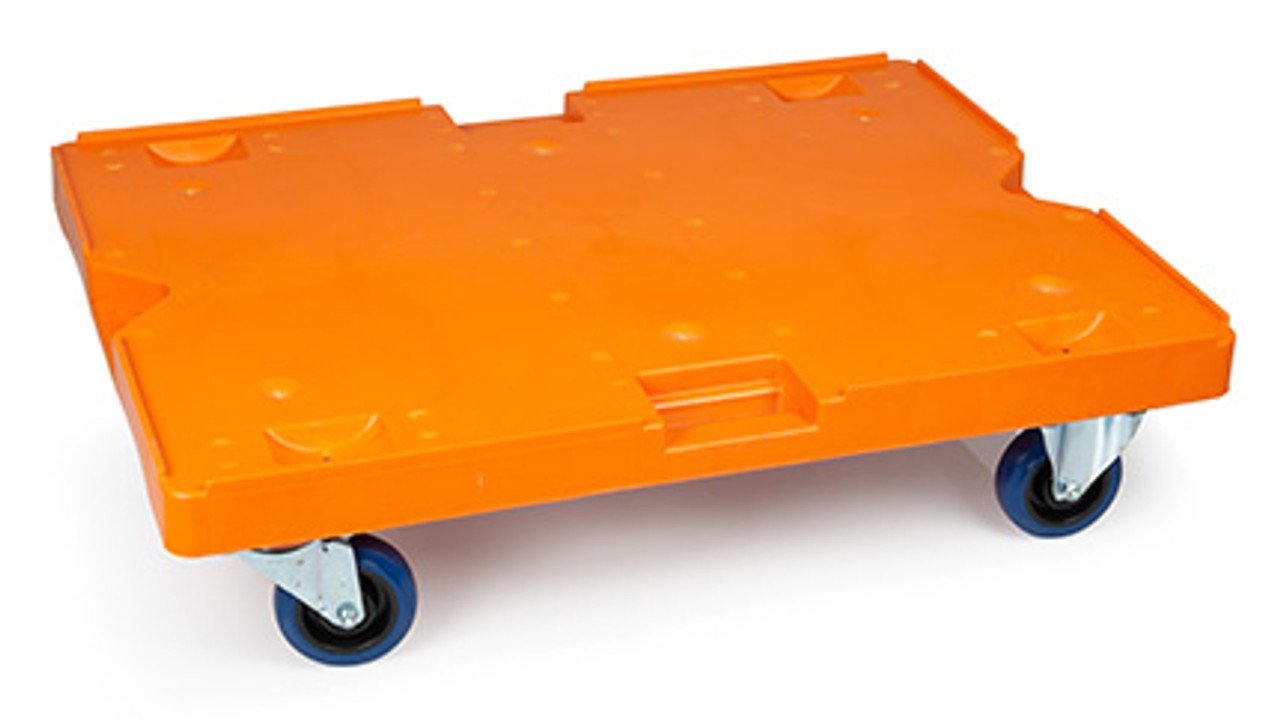

A plastic dolley rarely gets the attention it deserves. It sits at the edge of the warehouse floor, loaded and unloaded dozens of times a day, navigated through tight corridors and across concrete expanses by workers who scarcely give it a second thought. And yet, the decisions made when selecting a plastic dolley have real consequences: for safety, for efficiency, and for the physical wellbeing of the people who depend on it. In Singapore’s demanding logistics environment, where warehouses operate at high intensity and transport standards are closely observed, choosing the right plastic dolley is a more serious undertaking than most realise.
Understanding What You Are Actually Choosing
There is a tendency, particularly in procurement decisions made under time pressure, to treat all plastic dolleys as broadly equivalent. They are not. The differences between a well-designed plastic dolley and a poorly specified one are not visible at a glance. They reveal themselves over months of use, in castor failures, in cracked platforms, in overloaded units that tip mid-transit and send goods crashing to the floor.
The plastic dolley belongs to a category of equipment where the specification details are the story. Platform material, castor grade, load rating, surface texture, and dimensional footprint all interact to determine whether a unit is genuinely fit for purpose or simply adequate on paper.
Load Capacity: The Number That Cannot Be Ignored
Every plastic dolley carries a load rating, and that rating exists for a reason. Standard models used in Singaporean warehouses typically carry between 200 and 500 kilogrammes. Heavy-duty plastic dolleys extend this range to 600 kilogrammes or beyond, accommodating the kind of industrial loads encountered in manufacturing and bulk storage environments.
The critical point, frequently misunderstood, is that the rated capacity assumes evenly distributed weight across the full platform surface. A concentrated load placed at one end of a plastic dolley exerts disproportionate stress on the nearest castors and reduces effective capacity significantly. The practical rule is straightforward: always select a plastic dolley rated above your maximum anticipated load. A 20 per cent margin above peak load weight is a reasonable minimum buffer, preserving structural integrity over time and keeping the unit within safe operating parameters.
Castor Quality: Where Performance Is Won or Lost
If the platform is the body of a plastic dolley, the castors are its legs. Their quality determines how the unit rolls, how long it lasts, and how much control a worker retains when navigating a loaded platform through a busy warehouse.
Consider the following when evaluating castor specifications:
Castor material
Polyurethane castors are the standard of choice for indoor warehouse environments. They roll smoothly on concrete and sealed floors, produce minimal noise, and do not leave scuff marks.
Swivel versus fixed
Swivel castors allow omnidirectional movement, essential for manoeuvring through congested aisles. Most warehouse plastic dolleys use four swivel castors for maximum flexibility.
Bearing quality
Precision bearings within the castor wheel determine how smoothly the unit rolls under load. Inferior bearings create resistance, making the plastic dolley harder to control and increasing the physical effort required from workers.
Castor height and ground clearance
Sufficient clearance ensures the platform does not bottom out on uneven surfaces, which is particularly relevant in older warehouses and outdoor loading areas.
Platform Size and Surface Design
The dimensions of a plastic dolley platform determine what it can safely carry and how stable that load will be in transit. For general warehousing in Singapore, platform sizes ranging from 60 by 45 centimetres to 90 by 60 centimetres cover the majority of applications involving boxed goods, crates, and mid-sized equipment.
Surface texture is equally important. A ribbed or raised-grid surface prevents loads from sliding during transit, which is a significant safety factor when moving across smooth warehouse floors or navigating inclines at loading bays.
Material Resilience in Singapore’s Climate
Singapore’s tropical climate creates conditions that are unkind to materials not designed to withstand persistent humidity and heat. The plastic dolley, manufactured from high-density polyethylene or polypropylene, meets these conditions with considerable resilience.
- Metal alternatives corrode. A steel dolley exposed to humidity will rust over time, weakening its structure and eventually becoming a liability.
- Wooden platforms absorb moisture, warp, crack, and harbour bacteria, making them unsuitable for food-grade storage or hygiene-sensitive environments.
- A quality plastic dolley does none of these things. It resists corrosion, wipes clean easily, and maintains dimensional stability through years of use.
The Safety Case for Getting the Selection Right
Safe transport begins before the first load is placed on a plastic dolley. It begins at the point of selection. A poorly chosen unit does not fail dramatically or immediately. It degrades incrementally, and the risks it carries grow quietly alongside the wear on its components. In Singapore’s warehousing sector, where operational standards are high and workplace safety obligations are taken seriously, the selection process deserves genuine rigour. Assess the load requirements, evaluate the castor specifications, consider the environmental conditions, and then choose a plastic dolley that is genuinely built to meet them.